Dragon Singing. Autumnal Waters
龙吟秋水 Long Yin Qiu Shui
for flute and computer · 2002
为长笛与电脑而作 · 2002
Flute and computer in a musical labyrinth: concert piece, performance art and sound installation at once.
长笛与电脑置身音乐迷宫:既是音乐会作品,也是行为艺术与声音装置。
| Versions 版本 | a Dragon Singing amidst Autumnal Water for solo saxophone; for flute(s) and computer (Max/MSP); adaptable for any solo or duo wind instruments; and for computer alone 萨克斯管独奏版《a Dragon Singing amidst Autumnal Water》;长笛与电脑版(Max/MSP);可改编为任何木管或铜管独奏、二重奏;以及纯电脑版本 |
|---|---|
| Duration 时长 | a lifetime … a breath 一生……一息 |
| Performances 演出 | November 2002 — Derek Charke, flute; Hoh Chung Shih, computer 2005 — International Computer Music Conference, Derek Charke and Hoh Chung Shih 2002年11月——Derek Charke(长笛);何仲实(电脑) 2005——国际电脑音乐大会,Derek Charke 与何仲实 |
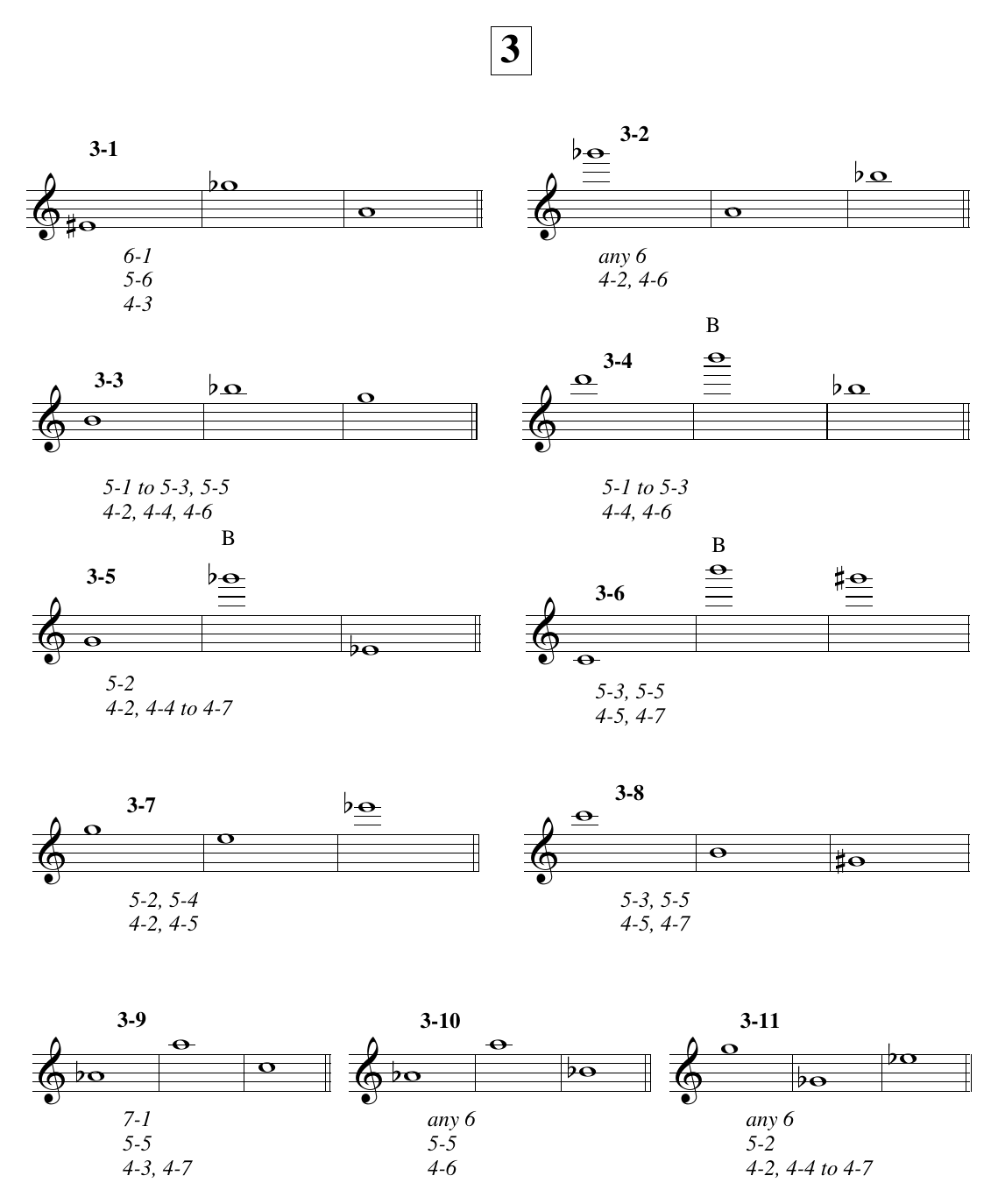
模块的一页:每个模块以其音符数目命名,演奏者在它们之间穿行。
About the work 关于作品
“Surely every man stands as a breath.” — Psalm 39:5
“世人都是一口气。”——《诗篇》39:5
a Dragon Singing amidst Autumnal Water for solo saxophone, also known as Long Yin Qiu Shui (龙吟秋水), is an open-form work of indeterminate length: thirty-six interlocking modules of very basic pitch materials, which the performer prepares before the performance and improvises with live. This version for flutes and computer grows from it, and the work can be adapted for any solo or duo wind instruments — or for computer alone, a kind of ‘jukebox’ calling up pre-recorded modules in the order a performer might choose them.
萨克斯管独奏作品《a Dragon Singing amidst Autumnal Water》,又名《龙吟秋水》,是一部长度不定的开放形式作品:由三十六个相互衔接、音高材料极为简约的模块组成,演奏者须在演出前准备,并在现场即兴。这个长笛与电脑的版本由此生长而来;作品也可改编为任何管乐器的独奏或二重奏——甚至是纯电脑版本,像一台‘点唱机’,按演奏者可能作出的选择顺序,调出预先录制的模块。
One of the most important aspects of the piece is the exploration of acoustic space. While composing it, I imagined a performance in a traditional Chinese garden, with pockets of space divided by walls of varying heights into courtyards, corridors, terraces and roofed halls, punctuated by windows, screen walls and pillars. The performer plays not just the instrument but the whole performance space, moving through it and exploring its acoustic characteristics: the sound of each module ‘illuminates’ the space.
这首作品最重要的面向之一,是对声学空间的探索。创作时,我想象演出发生在一座中国传统园林里:高低不一的墙把空间分隔成一个个庭院、回廊、平台与厅堂,其间点缀着花窗、屏墙与柱子。演奏者演奏的不只是乐器,而是整个表演空间——在其中移动,探索它的声学特性:每个模块的声音,都‘照亮’了这个空间。
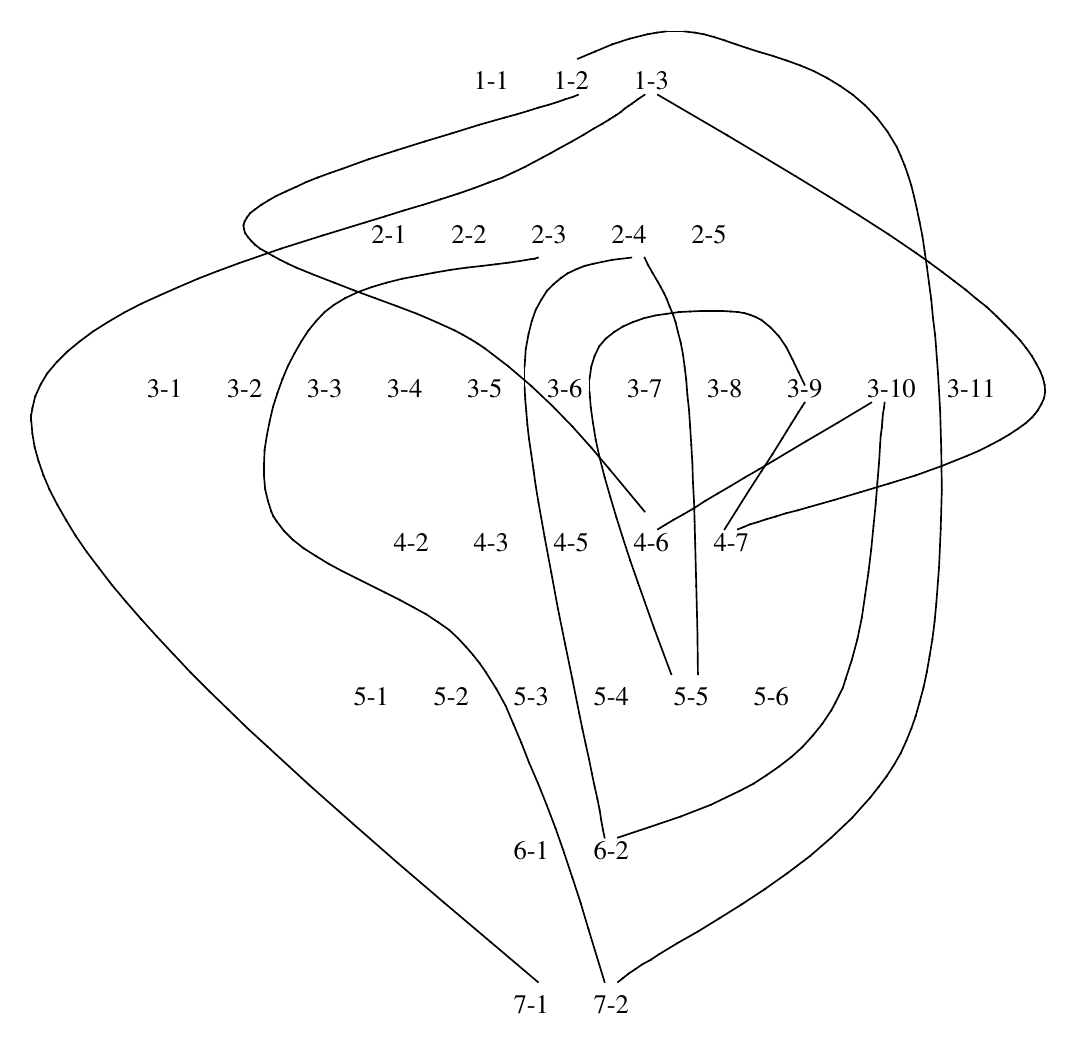
一次演出的路线:Derek Charke 在各模块之间走过的路径,自 7-1 开始,止于 2-3。线条没有箭头,因为每条路径都可双向行进。
In the version with computer, one flutist moves through the performance area while a second plays from the same score backstage or in another room; the second flute is modified and spatialised live in the first flutist’s space. It is like a landscape for different travellers to explore at once, meeting en route. The two players can even perform in two venues simultaneously, with the audience free to move between them.
在电脑版本中,一位长笛手在表演区域内移动,另一位则在后台或另一个房间里演奏同一份乐谱;第二支长笛的声音经过现场处理与空间化,投射到第一位长笛手的空间里。这就像一片风景,让不同的旅人同时探索,在途中相遇。两位乐手甚至可以同时在两个场地演出,观众可在两者之间自由走动。
The Sufi musician Inayat Khan wrote that each person has a note of their own, a particular sound expressive of their life, feelings and thoughts. Each performance of this piece lets a performer find that note in a space.
苏非派音乐家伊纳亚特·汗曾写道,每个人都有属于自己的一个音——一个表达其生命、感受与思想的特定声音。这首作品的每一次演出,都让演奏者在一个空间里找到那个音。
Listen 聆听
完整现场演出:Derek Charke(长笛);何仲实(电脑)。2005 国际电脑音乐大会
For scores, performance materials and other enquiries:
chungshih@chungshih.info
乐谱、演出资料及其他查询:
chungshih@chungshih.info