Veiling Time Shift Laboratory
multidisciplinary work for viola, guqin and immersive haptic-visual environment · 2026
为中提琴、古琴与沉浸式触觉—视觉环境而作的跨学科作品 · 2026
A hand moves. Light gathers it. Another hand answers in sound.
一只手移动,光把它接住,另一只手以声音回应。
| Artists 演出与创作 | Christoven Tan, composer-performer, viola Yeo Ker Siang, immersive environment designer Hoh Chung Shih, composer-performer, guqin Christoven Tan,作曲家、演奏者,中提琴 Yeo Ker Siang,沉浸式环境设计 何仲实,作曲家、演奏者,古琴 |
|---|---|
| Context 背景 | Elegant Sounds: Music, Craft, and the Literati exhibition, Asian Civilisations Museum, Singapore 新加坡亚洲文明博物馆 Elegant Sounds: Music, Craft, and the Literati 古琴文化展 |
| Presentations 呈现 | 28 August 2026 — performance lecture and panel, moderated by Kevin Lam, Senior Curator (Chinese Art), Ngee Ann Auditorium 29 August 2026 — performance, Scholars Gallery 2026年8月28日——演讲音乐会及座谈,主持:Kevin Lam(亚洲文明博物馆中国艺术高级策展人),Ngee Ann 礼堂 2026年8月29日——演出,Scholars Gallery 展厅 |
| Support 资助 | National Arts Council, Singapore, and Dalio Philanthropies 新加坡国家艺术理事会、Dalio Philanthropies |
The work 作品
Veiling Time Shift Laboratory began in conversations about guqin performance practice. In guqin music the written score carries literary meaning; that meaning suggests movements of hand and body; movement gives rise to sound; and sound feeds back into how the score is read — a continuous loop rather than a one-way passage from composer to performer.
Veiling Time Shift Laboratory 源于对古琴演奏实践的讨论。古琴谱承载文字意涵,意涵引出手与身体的动作,动作生发声音,声音又回过头影响对谱的解读——这是一个持续的循环,而非由作曲者单向传给演奏者的过程。
Veiling: information never passes unchanged; at every passage something is kept, transformed or lost. Time shift: an action in one moment becomes material for another; one performer’s movement becomes another’s next action, and the response becomes the next proposition.
Veiling(遮蔽):信息在传递中从不保持原样,每一次转换都有所保留、有所改变、有所失落。Time shift(时移):此刻的动作成为下一刻的材料;一位演奏者的动作成为另一位的下一步行动,回应又成为新的提议。
How it works 运作方式
The performers do not respond directly to each other’s sounds. Movement is captured by sensors, and the interactive system MIMI turns it into visual information that the other performer interprets. Christoven Tan’s movement becomes a visual field referring to jianzipu, the guqin’s tablature, for Hoh Chung Shih; Hoh’s movement becomes a visual field drawn from five-line staff notation for Tan. Each response is captured in turn, and the loop continues.
两位演奏者并不直接回应彼此的声音。传感器捕捉动作,互动系统 MIMI 将其转化为视觉信息,再由另一位演奏者解读。Christoven Tan 的动作化为参照古琴减字谱的视觉画面,供何仲实演奏;何仲实的动作化为取自五线谱的视觉画面,供 Tan 演奏。每一次回应又被捕捉,循环由此延续。
Both musicians make sound, and the audience hears all of it — but MIMI does not listen. It watches movement. The audience hears a musical conversation whose participants are communicating through another channel, while each performer receives only part of the whole. The visual forms are made familiar enough to be legible, unfamiliar enough to require interpretation.
两位音乐家都在发声,观众听见一切——但 MIMI 并不聆听,它观看的是动作。观众听到的是一场音乐对话,而对话双方却通过另一条渠道交流;每位演奏者只接收到整体的一部分。视觉形态既熟悉到足以辨读,又陌生到需要诠释。
The two instruments meet as two conditions of embodiment: the guqin intimate, acoustic and micro-gestural; Tan’s seven-string electric viola amplified and extended through a processor and a wearable glove. Yeo Ker Siang’s environment does not reconcile these differences or serve as a backdrop; it is an active medium that holds the translations and shapes how they are perceived.
两件乐器以两种身体状态相遇:古琴亲密、原声、以细微手势为本;Tan 的七弦电中提琴则经由处理器与可穿戴手套被放大和延展。Yeo Ker Siang 营造的环境并不调和这些差异,也不只是背景,而是承载种种转译、并塑造其被感知方式的积极媒介。
What it opened up 引发的思考
The laboratory raised a question larger than its technology: how musical knowledge passes between bodies and systems. On the guqin such knowledge has always travelled through hands, notation and lineage — jianzipu records movement rather than pitch, and a player learns as much from a teacher’s hands as from the page. Here it was made to travel through sensors, data and images instead. What survives the passage, what is reinvented, and what does the receiving body bring to it? The work is not, finally, about visualising music; it is about what happens when embodied knowledge travels — a question that now runs through a wider study of how a living practice is held, read and handed on.
这一实验室提出了一个超越技术本身的问题:音乐知识如何在身体与系统之间传递?在古琴中,这种知识历来经由双手、谱字与师承流传——减字谱记录的是动作而非音高,琴人从老师手上学到的,并不少于从谱上学到的。在这里,它改由传感器、数据与影像传递。在传递中,什么得以留存,什么被重新创造,接收的身体又带入了什么?这部作品归根结底并不是关于把音乐视觉化,而是关于身体知识在流动时发生了什么——这一问题如今贯穿于一项更广泛的研究之中:一种活的实践如何被承载、被阅读、被传承。
Photographs 图片
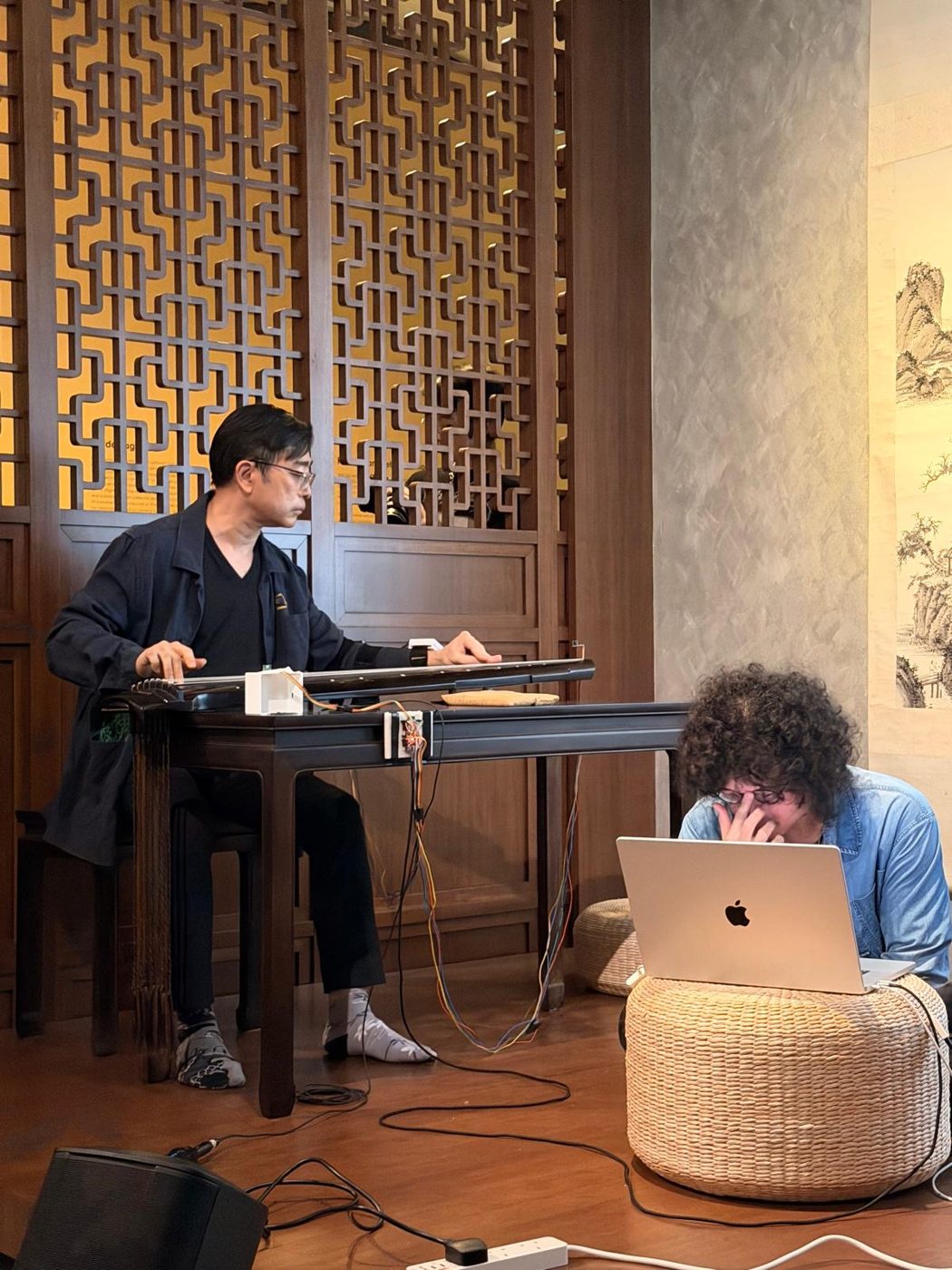
何仲实(古琴)与 Yeo Ker Siang,Scholars Gallery 展厅,2026年8月29日。
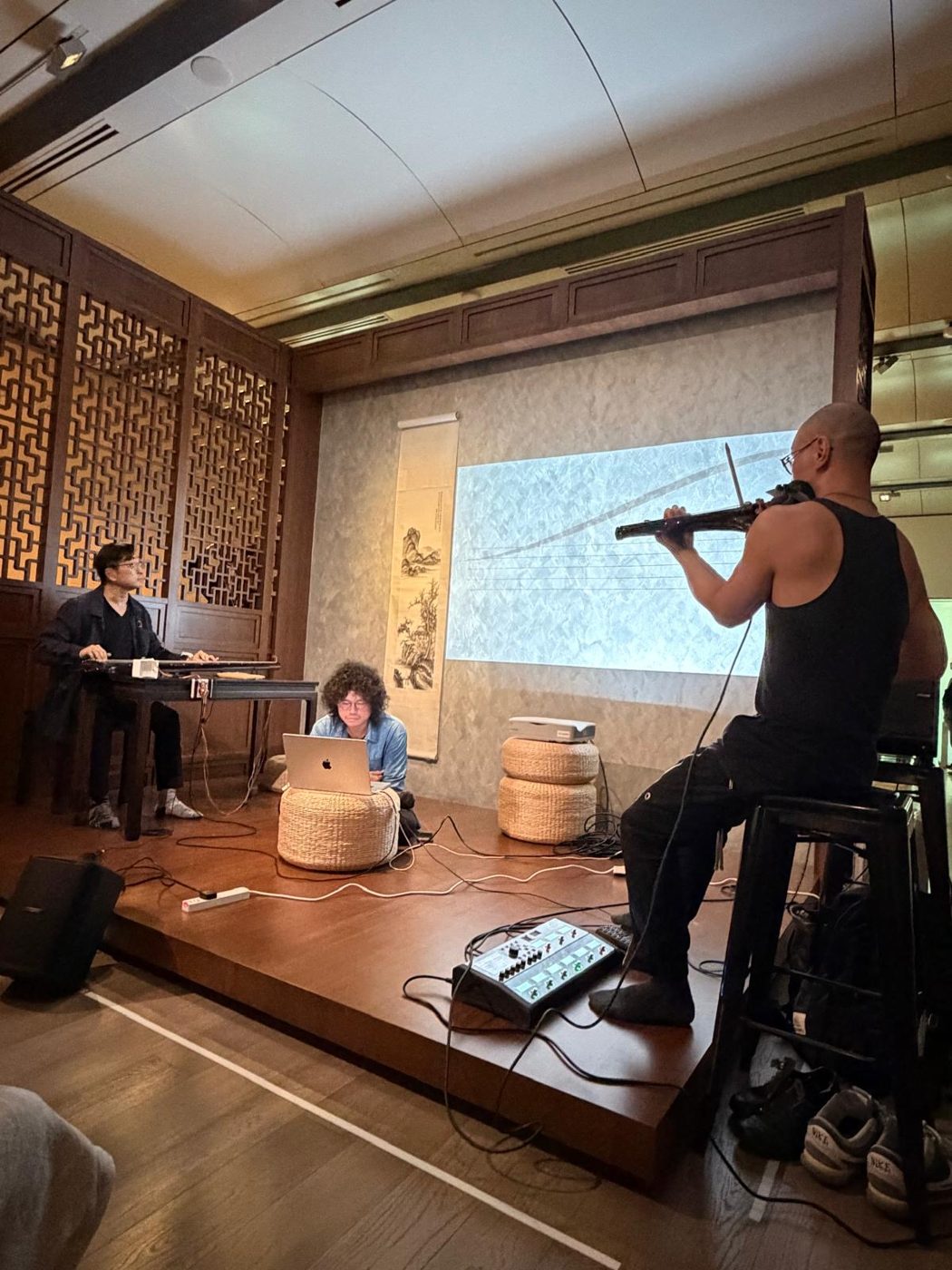
Christoven Tan(七弦电中提琴),与 Yeo Ker Siang、何仲实。
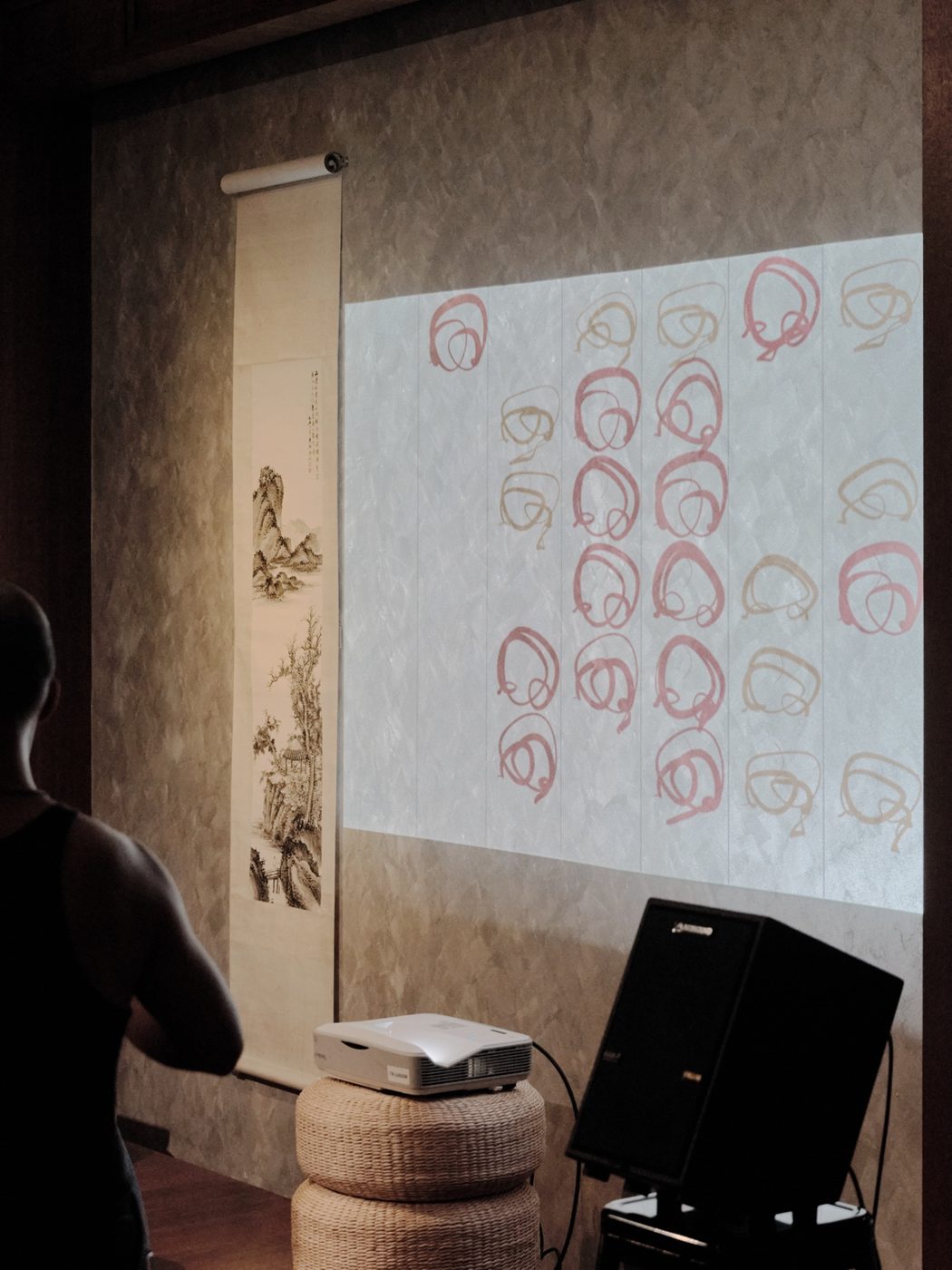
由动作生成的影像投射于展厅中。
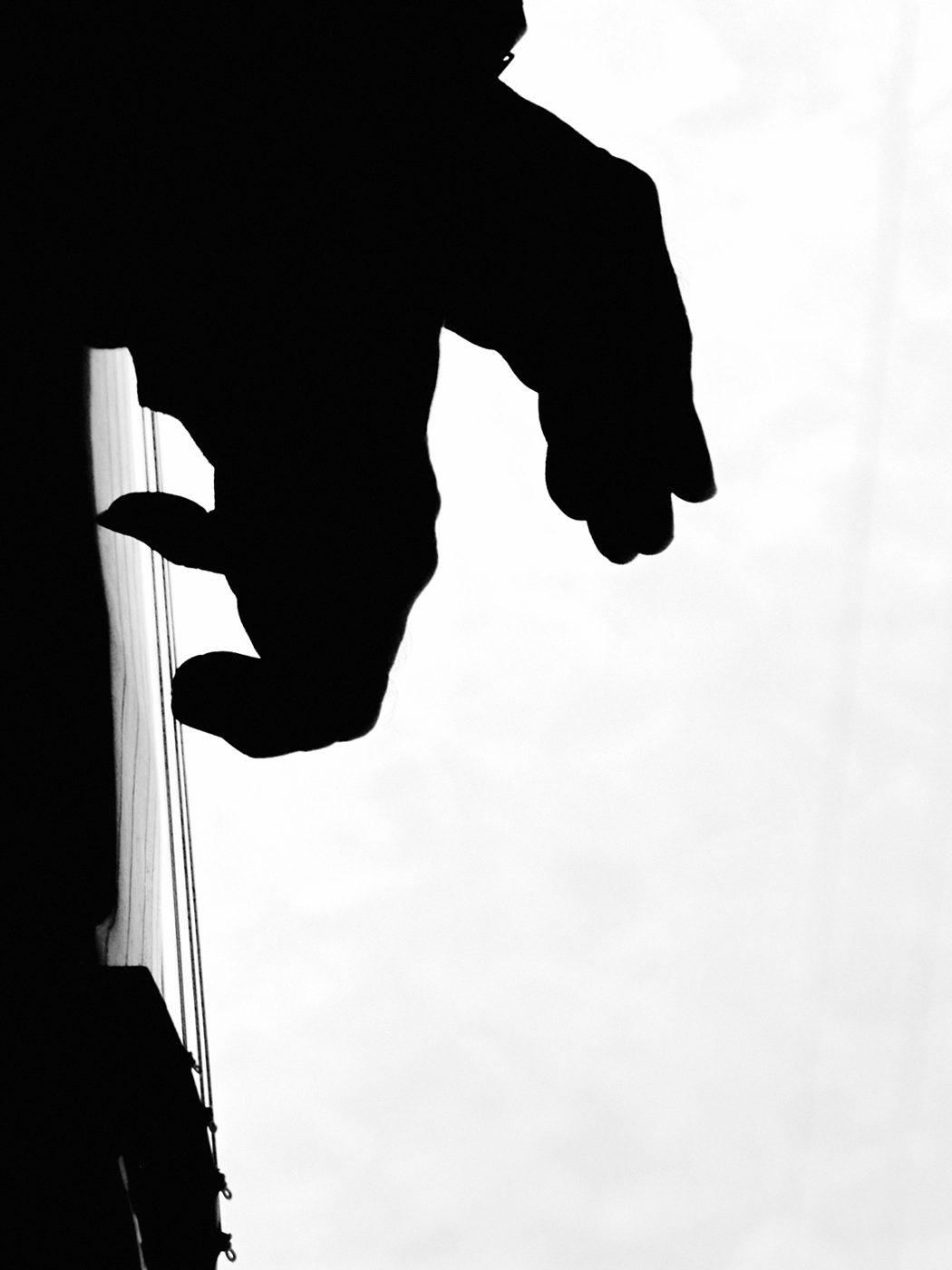
弦上之手,剪影。
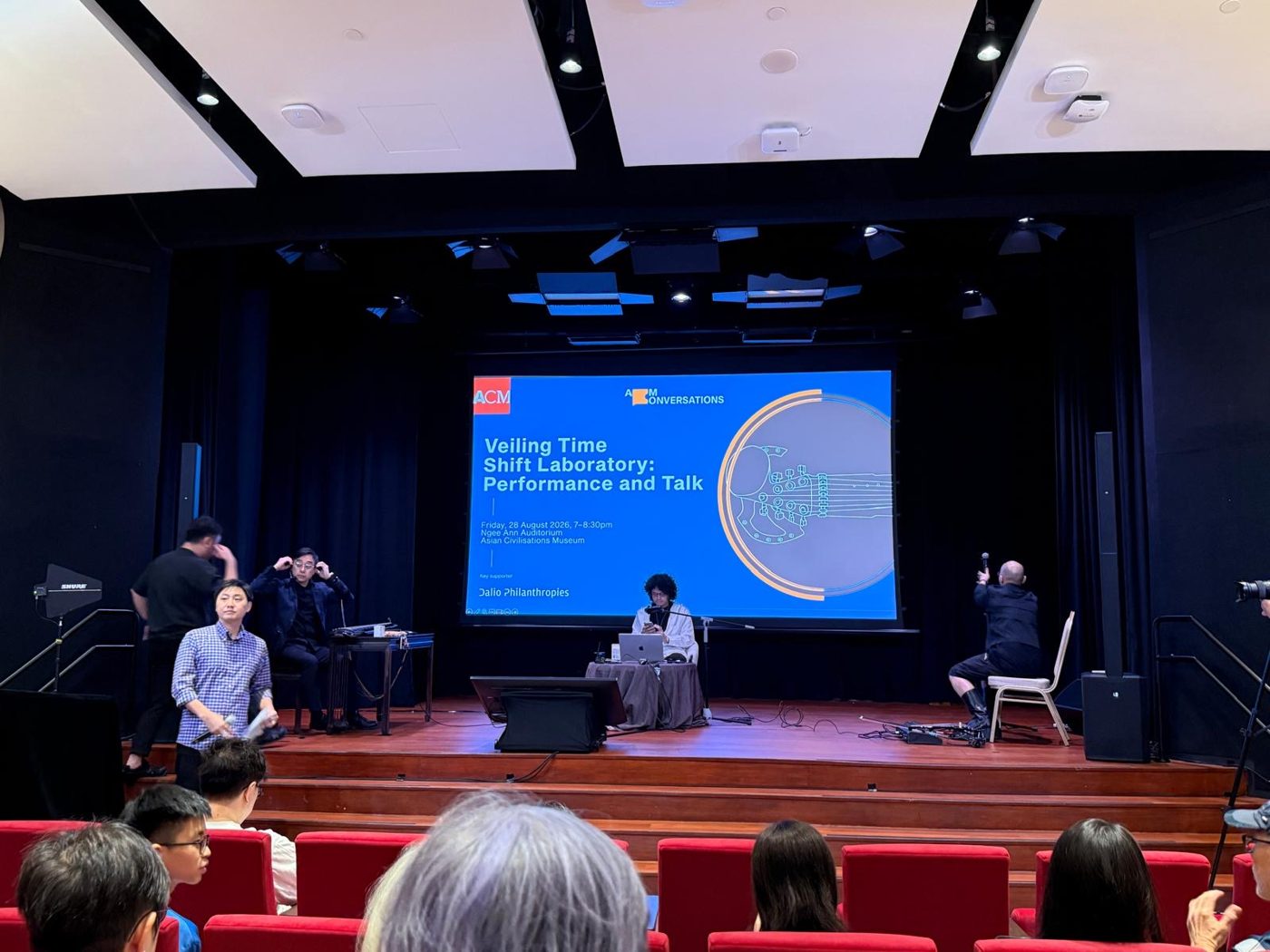
演讲音乐会,Ngee Ann 礼堂,2026年8月28日。
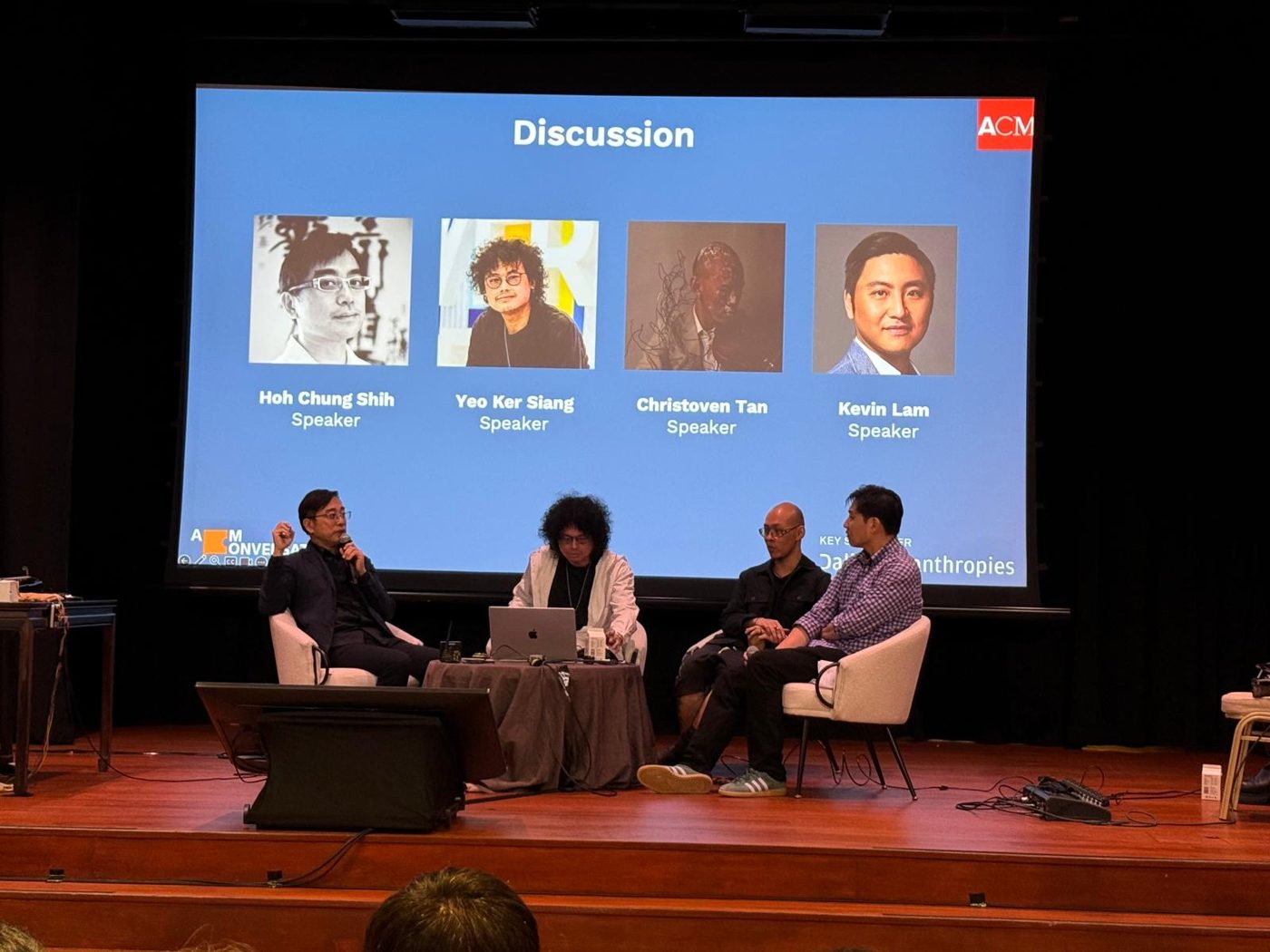
与亚洲文明博物馆中国艺术高级策展人 Kevin Lam 的座谈。
Photographs courtesy of the artists.
图片由艺术家提供。
For scores, performance materials and other enquiries:
chungshih@chungshih.info
乐谱、演出资料及其他查询:
chungshih@chungshih.info