Yuan
for 2 or more music-makers · 2006 · unlimited duration
为两位或以上的音乐演奏者而作 · 2006 · 时长不限
Source, circle, connection: one sound, yuan, a world that unfolds without end.
渊、源、圆、缘——一个“yuan”音,一个无尽展开的世界。
| Written for 题献 | Sigune von Osten and Wuwei Sigune von Osten 与 Wuwei |
|---|---|
| Forms 形式 | For 2 or more musicians; as an installation and performance environment; for flutist and tape; combined with Parts 为两位或以上的乐手;作为装置与表演环境;为长笛与录音带;与 《Parts》 结合 |
| Listen 聆听 | ▶ Yuan / Parts, SETTS (video) ▶ Yuan / Parts, SETTS, with audience participation (video) ▶ Parts / Yuan, Ensemble Reconsil (Spotify) ▶ 《Yuan / Parts》SETTS(视频) ▶ 《Yuan / Parts》SETTS,含观众参与(视频) ▶ 《Parts / Yuan》Ensemble Reconsil(Spotify) |
.jpg)
乐谱封面,以及乐谱中收录的博斯《人间乐园》闭合外翼画(Wikimedia Commons)。
About the work 关于作品
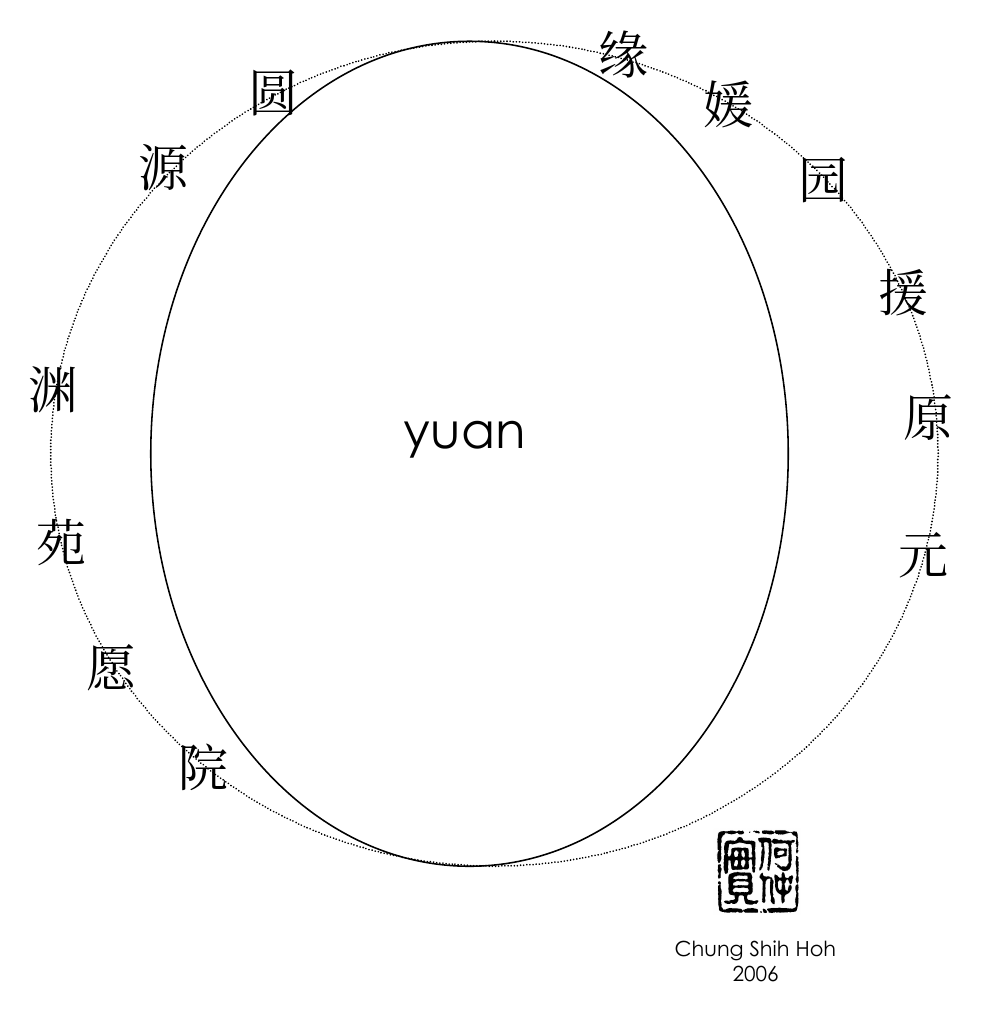
The title does not resolve into a single Chinese character. It refers to a group of words in Mandarin sharing the same sound, yuan, differentiated by tone. Some are closely related in meaning, sharing the same origins. This network of meanings, ancient and current, resonates with the work:
| 渊 | whirlpool; deep body of water; deep |
| 源 | water source; origin; to search |
| 圆 | circle; complete; full; satisfying |
| 缘 | edge; follow along; destiny |
| 媛 | a beauty |
| 园 | an orchard, a garden |
| 援 | to lead; to introduce; to use; to assist; to take |
| 原 | water source, origin; searching for origin; beginning; to forgive; expanse; to repeat |
| 元 | beginning; head; first; origin; creation |
| 院 | strong; secure; courtyard; monastery |
| 愿 | to agree; hope; intention; to admire; to long; honest |
| 苑 | a zoo; an orchard; a garden; a hunting ground; a place for talents |
标题并不落在某一个汉字上。它指向普通话中一组同音为“yuan”、以声调区分的字;其中一些字义相近、同出一源。这张古今含义交织的网络,与作品相互回响:
| 渊 | 漩涡;深水;深 |
| 源 | 水源;本源;探寻 |
| 圆 | 圆形;完整;圆满;满足 |
| 缘 | 边缘;沿循;缘分 |
| 媛 | 美女 |
| 园 | 果园;园子 |
| 援 | 引领;引荐;运用;援助;取 |
| 原 | 水源、本源;寻本溯源;起初;原谅;广阔的平野;重复 |
| 元 | 开始;首;第一;本源;创始 |
| 院 | 坚固;安稳;庭院;寺院 |
| 愿 | 同意;希望;意愿;仰慕;向往;诚实 |
| 苑 | 动物园;果园;园林;猎场;人才荟萃之所 |
The score presents the work as a network and gives it an unlimited duration. The closed shutters of Bosch’s Garden of Earthly Delights, reproduced in the score, carried for me the idea of a universe unto itself: finite in materials, yet capable of almost limitless unfoldings in time.
乐谱把作品呈现为一张网络,并赋予它不限的时长。乐谱中收录的博斯《人间乐园》闭合的外翼画,对我而言承载着“自成一体的宇宙”这一意念:材料有限,却能在时间中几乎无限地展开。
How it is played 演奏方式
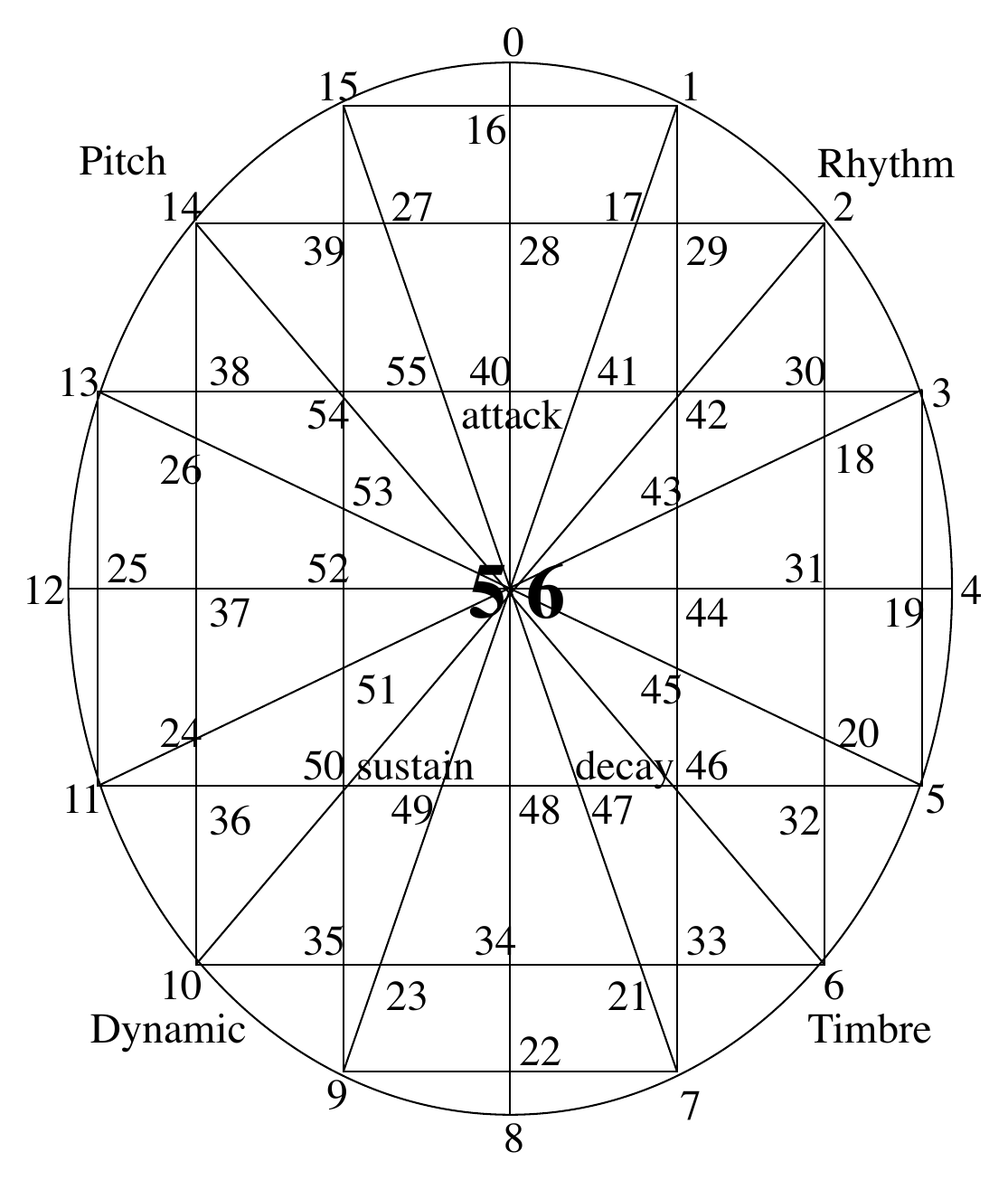
57 点地图:一个中心与四道轨道,音高、节奏、音色与力度位于四方。取自乐谱。
The performance space becomes a map of 57 points: a centre and four orbits, joined by paths. Each point is both a place and a step in the musical discourse, focusing on one or two elements of sound — pitch, rhythm, timbre, dynamics, or the attack, sustain and decay of a sound. The outer orbit is free dialogue; the next, imitation; the next, opposition; the innermost, dialogue through imitation and opposition; and the centre, a unison so close it becomes almost heterophonic.
表演空间化为一张由 57 个点组成的地图:一个中心与四道环形轨道,以路径相连。每个点既是一个地点,也是音乐进程中的一步,聚焦于声音的一两个元素——音高、节奏、音色、力度,或声音的起音、延续与衰减。最外圈是自由对话;其次是模仿;再其次是对立;最内圈是通过模仿与对立展开的对话;而中心,则是紧密到几近支声的齐奏。
The musicians begin together at the centre, listening for a sound from the environment — not made for the performance, but found in the space at that moment. From there each travels outwards through the orbits and back, at their own pace and by their own route, and the piece ends when all have returned to the centre.
乐手们一同从中心出发,聆听来自环境的一个声音——不是为演出而制造的声音,而是那一刻空间里偶然出现的声音。从那里开始,每个人按自己的步调、自己的路线,穿过一道道轨道向外走,再走回来;当所有人都回到中心,作品便结束。
Performances and versions 演出与版本
2006 — written for Sigune von Osten and multi-instrumentalist Wuwei for Parkmusik “Neue Ho(e)rizonte”, Bad Münster, Germany; the planned performance did not take place.
2006——为 Sigune von Osten 与多乐器演奏家 Wuwei 而作,原定于德国巴特明斯特 Parkmusik “Neue Ho(e)rizonte” 演出,最终未能举行。
2007 — first performance: “a locatively effected ambulaphonic performance installation and environment”, Peppers Art Gallery, University of Redlands, USA, 18–24 October. Bradford Andrews, sound diffusion; Hoh Chung Shih, guqin and composition; Snezana Petrovic, video art and installation; Marco Schindelmann, voice; Lara Urrutia, accordion.
2007——首演:“a locatively effected ambulaphonic performance installation and environment”,美国雷德兰兹大学 Peppers 美术馆,10月18日至24日。Bradford Andrews(声音扩散);何仲实(古琴与作曲);Snezana Petrovic(录像艺术与装置);Marco Schindelmann(人声);Lara Urrutia(手风琴)。
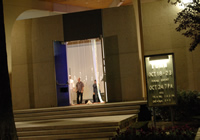
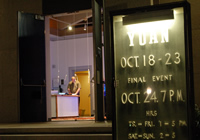
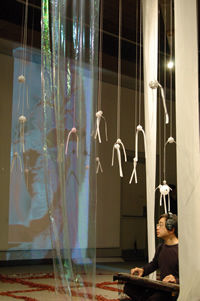
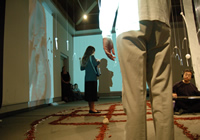
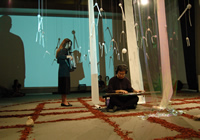
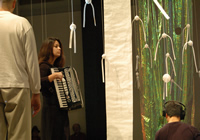
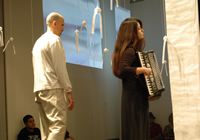
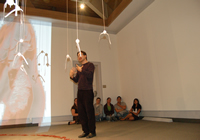
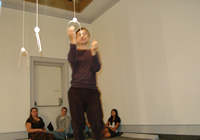
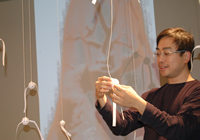
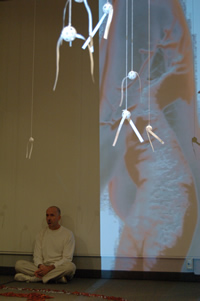
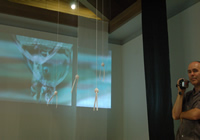
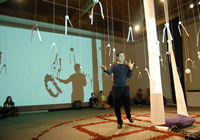
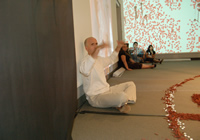

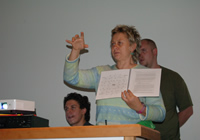

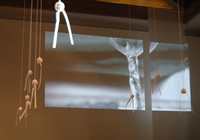
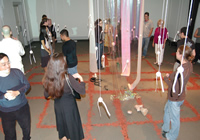
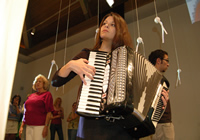
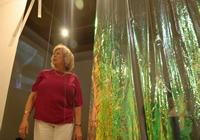
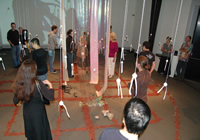
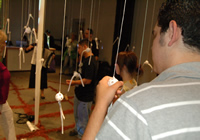
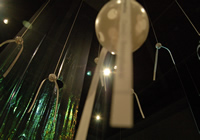
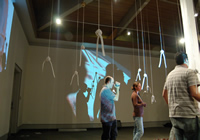
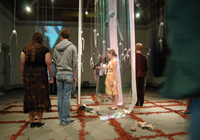
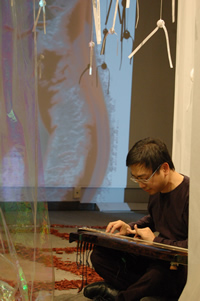
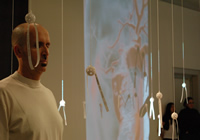
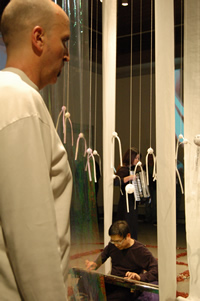
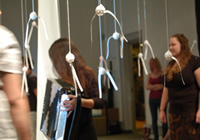
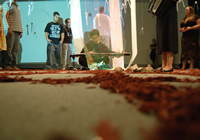
Yuan at Peppers Art Gallery, University of Redlands, 2007 · 《Yuan》,雷德兰兹大学 Peppers 美术馆,2007
2010 — sound art installation, SITE-THINGS, Young Musicians’ Society, Singapore.
2010——声音艺术装置,SITE-THINGS,新加坡青年音乐家协会。
2013–15 — Parts / Yuan, combined with Parts: Ensemble Mosaik, Mahidol University, Bangkok (2013); Ensemble Reconsil, Vienna (2015); SETTS, Esplanade Recital Studio, Singapore, with audience interaction (2015); SETTS trio, Goodman Arts Centre, Singapore (2015).
2013–15——《Parts / Yuan》,与 《Parts》 结合:Ensemble Mosaik,曼谷玛希隆大学(2013);Ensemble Reconsil,维也纳(2015);SETTS,新加坡滨海艺术中心,含观众互动(2015);SETTS 三重奏,新加坡 Goodman Arts Centre(2015)。
2014 — Yuan for flutist and tape, in Artistes’ Manifesto, Odyssey Dance Theatre, Singapore: Paul Huang, flute; Linnea Ong, dancer; Lau Eng Seng, photographer.
2014——长笛与录音带版《Yuan》,于新加坡奥德赛舞蹈剧场《Artistes’ Manifesto》中演出:Paul Huang(长笛);Linnea Ong(舞者);Lau Eng Seng(摄影师)。
For scores, performance materials and other enquiries:
chungshih@chungshih.info
乐谱、演出资料及其他查询:
chungshih@chungshih.info